Parallel discoveries
by Marinus Jan Marijs
Parallel independent discoveries / multiples
The hypothesis of multiple discovery is that most scientific discoveries and inventions are made independently and more or less simultaneously by multiple scientists and inventors.
“When Nobel laureates are announced annually—especially in physics, chemistry, physiology-or-medicine, and economics—increasingly, in the given field, rather than just a single laureate, there are two or the maximally-permissible three, who often have independently made the same discovery.
Commonly cited examples of multiple independent discovery are the 17th-century independent formulation of calculus by Isaac Newton, Gottfried Wilhelm Leibniz and others; the 18th-century discovery of oxygen by Carl Wilhelm Scheele, Joseph Priestley, Antoine Lavoisier and others; and the theory of evolution of species, independently advanced in the 19th century by Charles Darwin and Alfred Russel Wallace.” (Wikipedia)
Noam Chomsky:”….Charles Sanders Peirce, in his inquiry into what he called abduction….Pierce was struck particularly by the striking fact, that in the history of science major discoveries are often made independently and almost simultaneously, which suggest that some principle is directing enquiring minds, towards that goal under the existing circumstances of understanding.”
(Noam Chomsky: “The machine, the ghost, and the limits of understanding.”)
List of multiple independent discoveries
What follows is a list of more of these examples:
Calculus
Isaac Newton (Great Britain), Gottfried Wilhelm Leibniz (Germany).
Newton’s Law
Isaac Newton (Great Britain), Robert Hooke (Great Britain).
Oxygen
(Sweden 1773), Joseph Priestley (Great Britain, 1774).
Theory of the evolution of species
Charles Darwin (Great Britain), and Alfred Russel Wallace (Great Britain).
Black-hole theory
John Michell (Great Britain), in a 1783 paper, a few years later by Pierre-Simon Laplace (France).
Electromagnetic induction
Michael Faraday (Great Britain) in 1831, and independently about the same time by Joseph Henry (U.S.A.).
Chloroform
Samuel Guthrie in the (U.S.A.) July 1831, and a few months later Eugène Soubeiran (France) and Justus von Liebig (Germany).
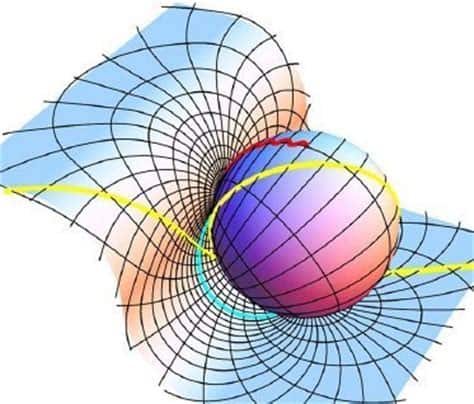
Non-Euclidian geometry hyperbolic geometry
Nikolai Ivanovich Lobachevsky (Russia) 1830, János Bolyai (Hungary) 1832.
Electrical telegraph
Charles Wheatstone (Great Britain), 1837, Samuel F.B. Morse (U.S.A.), 1837.
First law of thermodynamics.
Late 19th century Germain Hess (Russia), Julius Robert von Mayer (Germany), and James Joule (Great Britain).
Neptune
In 1846 Urbain Le Verrier (France) and John Couch Adams (Great Britain).
Helium
Pierre Jansen (France), Norman Lockyer (Great Britain) both in 1868.
Periodic table of chemical elements
In 1869, Dmitri Ivanovich Mendeleev (Russia) and the next year Julius Lothar Meyer (Germany).
Malaria parasite
Batista Grassi (Italia) Ronald Ross (India).
Photography
Dagueirre (France), Talbot(Great Britain).
RNA structure
Warren Nirenberg (U.S.A.), Gobind Khorona (India), Robert Holley (U.S.A.).
Telephone In 1876,
Elisha Gray (U.S.A.) and Alexander Graham Bell (U.S.A.) filed a patent on discovery of the telephone on the same day.(14 February 1876).
Electric light
Thomas Edison (USA) Sir Joseph W. Swan (Great Britain).
Anthrax bacteria
Robert Koch (Germany), Louis Pasteur (France) 1870.
Phonograph
In 1877 Charles Cros (France) and 1878 by Thomas Edison (USA).
Logarithms
John Napier(Great Britain),Henry Briggs (Great Britain), Joost Burgi (Switzerland).
Electron
J.J. Thompson (Great Britain), Charles-Francios de Cissternay DuFay (France).
The Hall–Héroult process for inexpensively producing aluminum in 1886 by Charles Martin Hall (USA) and Paul Héroult (France).
Airplane
The Wright brothers (USA), Richard Peers (New Zealand) 2 years earlier.
Knowledge, that the hereditary information is carried in the chromosomes.
In 1902 Walter Sutton (USA) and Theodor Boveri (Germany) .
Spectral lines
Lord Kelvin (Great Britain), Robert Kirchhoff (Germany).
Colour photography
Charles Cros (France), Louis Ducos du Hauron (France).
The stratosphere In the same year (1902) Richard Assmann (Germany) and Léon Teisserenc de Bort (France).
E = mc2,
Henri Poincaré (France), 1900; Olinto De Pretto (Italia), 1903; Albert Einstein (Switzerland), 1905; Paul Langevin (France), 1906.
Bakelite
1907 Baeleland (USA), J. Swineburne (Great Britain).
Stark–Einstein law
Photochemical equivalence law,— independently formulated between 1908 and 1913 by Johannes Stark (Germany) and Albert Einstein (Switzerland).
Bacteriophages (viruses that infect bacteria)
Frederick Twort (Great Britain) 1915, Félix d’Hérelle (France) 1917.
Sound film — Joseph Tykociński-Tykociner (Poland) 1922, Lee De Forest (USA) 1923.
Primordial soup theory of the evolution of life from carbon-based molecules Alexander Oparin (Russia) 1924, J.B.S. Haldane (Great Britain).
Television
Sawyer(USA) Morris Le Blanc (France) Baird (Great Britain) Jenkins (USA).
Expansion of the universe
Edwin Hubble (USA) Abbe Georges LeMaitre (Belgium) Willem Sitter (The Netherlands).
Indefinability theorem,
Kurt Gödel (Austria-Hungary), Alfred Tarski (Poland).
The “universal computing machine”
by Alan Turing (Great Britain), but also independently by Emil Post (Poland), both in 1936. Similar approaches, also aiming to cover the concept of universal computing, were introduced by S.C. Kleene (USA) and by Alonzo Church (USA) that same year.
The jet engine, independently invented by them, was used in working aircraft by Hans von Ohain (Germany) 1939, Secondo Campini (Italia), 1940 and Frank Whittle (Great Britain) 1941.
The Higgs boson was developed into a full relativistic model in 1964 independently and almost simultaneously by three groups of physicists: by François Englert (Belgium) and Robert Brout (American-Belgian) by Peter Higgs (Great Britain); and by Gerald Guralnik (USA), C. R. Hagen (USA), and Tom Kibble (Great Britain).
Nuclear Magnetic Resonance
E.M. Purcell (USA), Felix Bloch (Switzerland).
CAT scanner
Godfrey Honnsfield (Great Britain) Allan Cormack (USA).
The laser was developed independently by Gordon Gould (USA) at Columbia University and by researchers at Bell Labs, and by the Aleksandr Prokhorov (Russia).
The discovery of the accelerating expansion of the universe through observations of distant supernovae.
Saul Perlmutter (USA), Adam G. Riess (USA) and Brian P. Schmidt (USA).
————————————————————————————————————————————-
“Historians and sociologists have remarked on the occurrence, in science, of “multiple independent discovery”. Robert K. Merton defined such “multiples” as instances in which similar discoveries are made by scientists working independently of each other. “Sometimes the discoveries are simultaneous or almost so; sometimes a scientist will make a new discovery which, unknown to him, somebody else has made years before. “Multiple independent discovery, however, is not limited to only a few historic instances involving giants of scientific research. Merton believed that it is multiple discoveries, rather than unique ones, that represent the common pattern in science.” (Wikipedia)
How to explain the phenomenon:
The list of multiple independent discoveries and inventions, here above is just a small list of the most well-known discoveries and inventions. If one would include those within less known specialisms one would easily compile a list of hundreds of examples.
What is the mechanism behind these synchronistic occurrences. Much can be explained by the steady development of technology, cultural development, communication, writing, printing, education, mass media and the internet. But it is the frequency and the extensiveness of the occurrences that is so impressive, that one could take some Jungian synchronistic explanation into consideration.
Parallel independent discoveries are possibly based on a kind of non-local resonance which manifests itself in human minds when they are collectively focused on the same subject.
Show some love
"A philosophical treatise can be mostly written in object or process language,
but phenomenological descriptions must be by its very nature first person descriptions.
It is for this reason that self-observations, and personal experiences of the author are included."
Marinus Jan Marijs.